.png)

Equity Breadth Holds as Bond Conviction Stays Thin
Broad equity breadth is positive, but leadership is still split between defensive winners and recovering growth exposures.
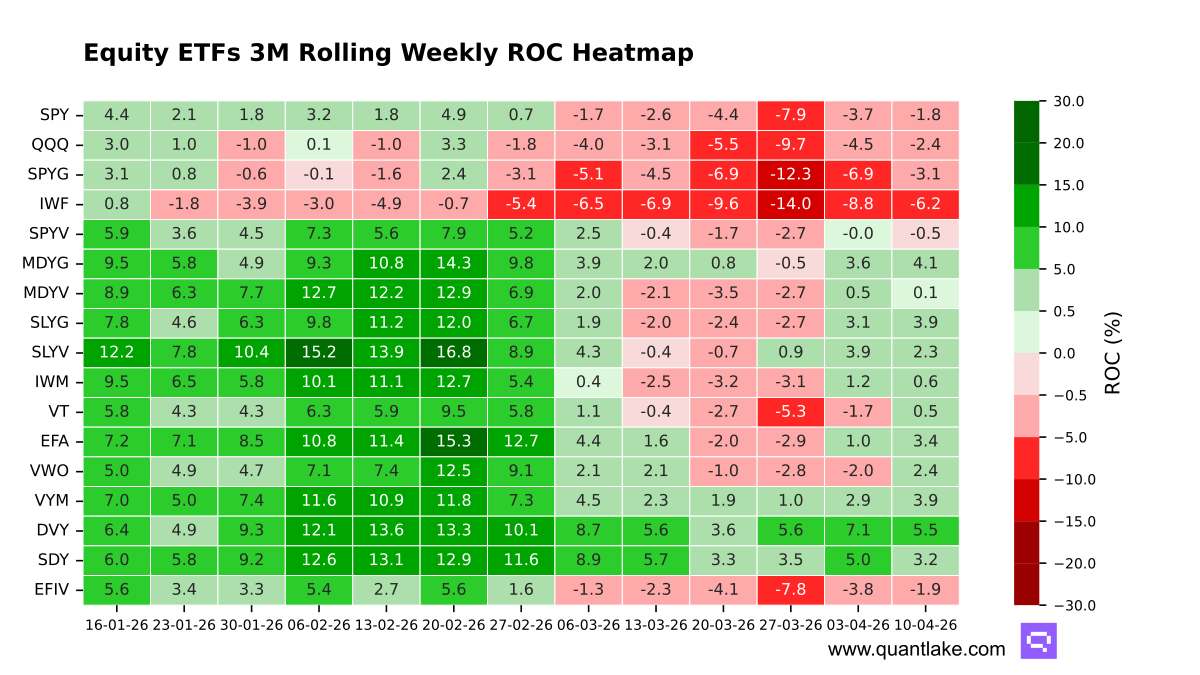
Defensive income stayed in front, with iShares Select Dividend ETF (DVY) leading broad equities. Three-month momentum — the rate at which price has changed over the past 13 weeks — held at 5.5%, down 1.6 points on the week. That kept defensive income exposures on top even as the pace cooled.
At the weaker end, iShares Russell 1000 Growth ETF (IWF) remained the laggard at -6.2%, up 2.6 points. SPDR Portfolio S&P 500 Growth ETF (SPYG) improved to -3.1%, up 3.8 points, and Invesco QQQ Trust (Nasdaq 100) (QQQ) rose to -2.4%, up 2.1 points. The regime (the prevailing momentum direction) across the group is still more recovery than clean uptrend.
Participation was solid, if not broad-based, with broad equities breadth (the share of ETFs with positive momentum) at 68.8%. The clearest turn came from Vanguard FTSE Emerging Markets ETF (VWO), which rose to 2.4%, up 4.4 points. It entered a breakout (three-month momentum has risen above the median of its own 52-week momentum history) and a sign flip (momentum crossing the zero line). iShares MSCI EAFE ETF (International Developed) (EFA) also entered a breakout at 3.4%, up 2.4 points. Vanguard Total World Stock ETF (VT) turned positive at 0.5%, up 2.2 points. SPDR Portfolio S&P 500 Value ETF (SPYV) was the lone negative sign flip, slipping to -0.5%, down 0.5 point. iShares Russell 2000 ETF (IWM) moved into a breakdown (three-month momentum has fallen below the median of its own 52-week momentum history) at 0.6%, down 0.6 point.
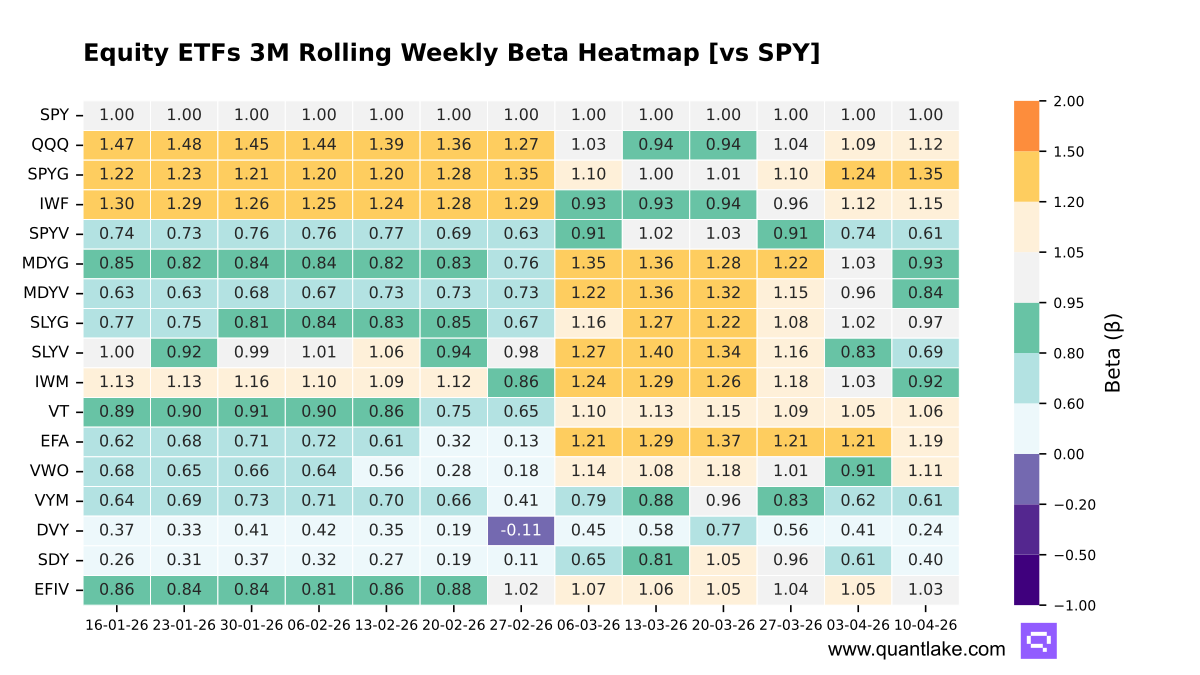
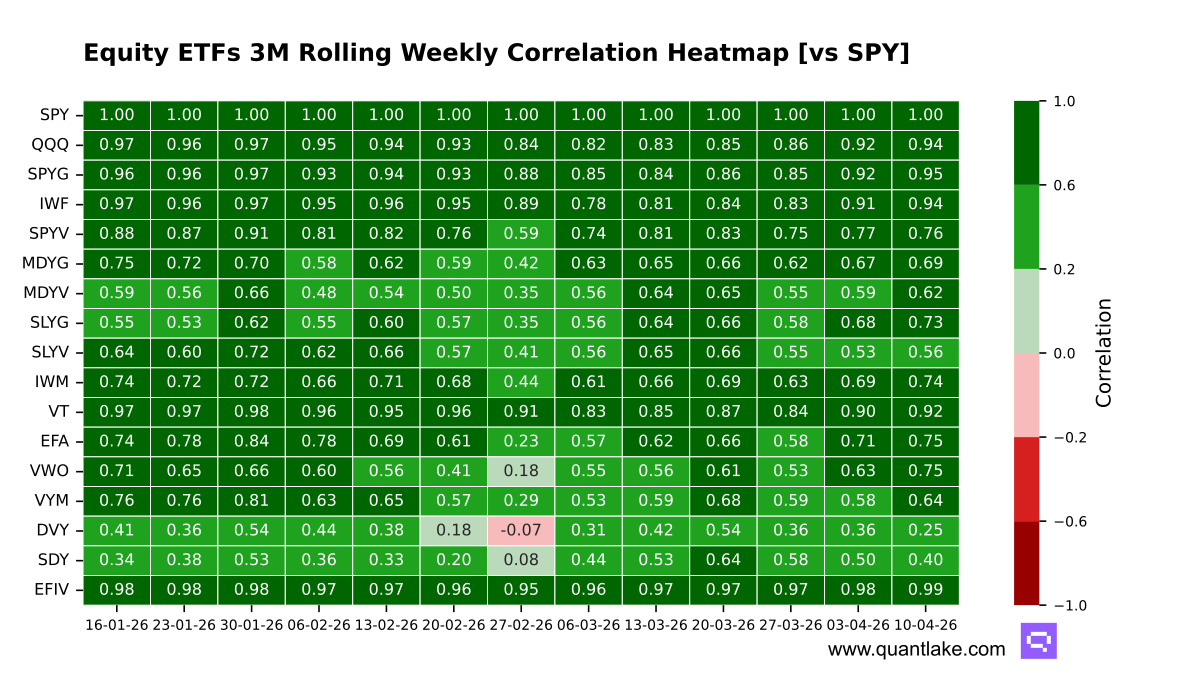
Even so, the rotation continued to favor dividend and lower-beta leadership, while the weekly impulse shifted toward international and growth-sensitive funds. VWO, EFA and VT all improved, while SPYG and IWF remained in negative territory despite stronger week-over-week gains. The result was a mixed equity backdrop: leadership stayed defensive, but the biggest changes came from beaten-down segments attempting to find a base. On a 13-week rolling basis, VWO also showed increasing sensitivity to broad market moves. Linkage (how closely an ETF's momentum tracks broad equity moves) rose alongside the rebound. Meanwhile, SPDR S&P Dividend ETF (Dividend Aristocrats) (SDY) eased to 3.2%, down 1.8 points. Its momentum was flat week-over-week and decoupled from broad market moves.
Bond breadth looks healthy on the surface, but momentum remains shallow and conviction is thin.
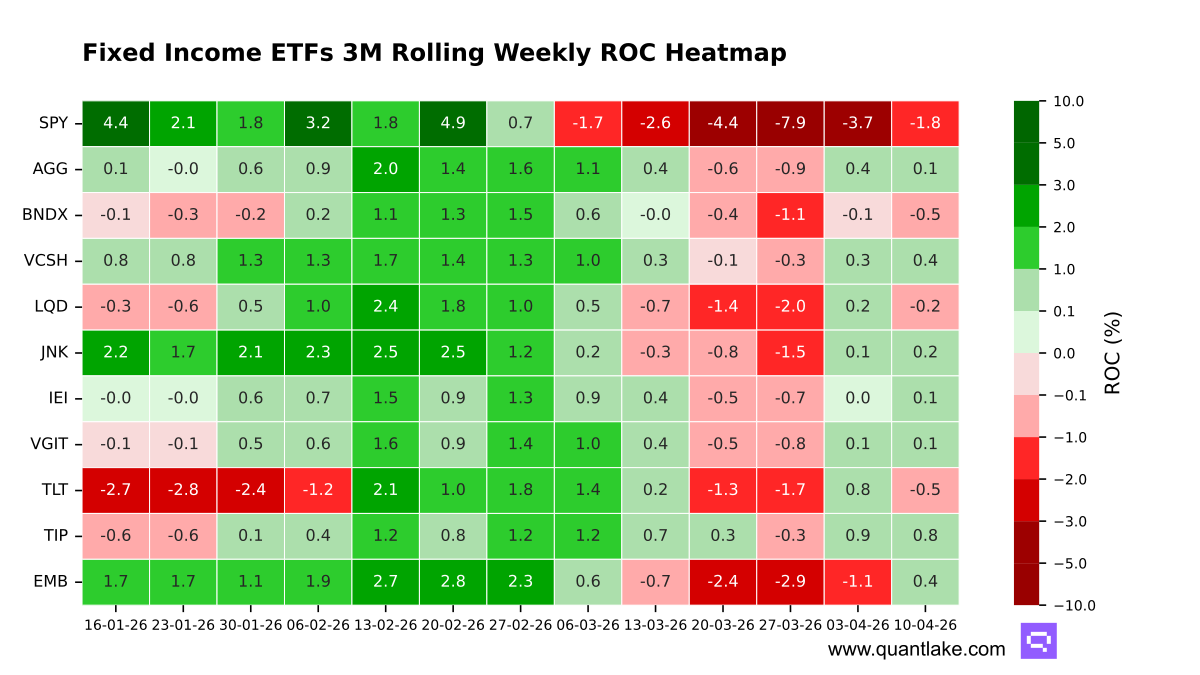
The bond rebound still looked shallow, with iShares TIPS Bond ETF (TIP) leading fixed income at just 0.8%, down 0.1 point, even as equities stabilized from weak bases. At the other end, iShares 20+ Year Treasury Bond ETF (TLT) fell to -0.5%, down 1.3 points. That was the weakest reading in the group and the clearest cross-asset contrast with the firmer tone in broad equities. Fixed-income breadth (the share of ETFs with positive momentum) was 70.0%, but most positive readings clustered just above zero, keeping conviction thin.
The standout was the split between duration (long-term government bonds, more sensitive to interest-rate changes) and credit (corporate and high-yield bonds, more sensitive to economic conditions). Credit held up better. iShares J.P. Morgan Emerging Markets Bond ETF (EMB) rose to 0.4%, up 1.5 points, in a breakout and positive sign flip. SPDR Bloomberg High Yield Bond ETF (JNK) held 0.2%, up 0.1 point, also in a breakout. Duration weakened instead. TLT turned negative and entered a breakdown and negative sign flip. iShares Investment Grade Corporate Bond ETF (LQD) slipped to -0.2%, down 0.4 point, in a breakdown and negative sign flip. Vanguard Total International Bond ETF (BNDX) fell to -0.5%, down 0.4 point, in a breakdown. iShares Core U.S. Aggregate Bond ETF (AGG) was still positive at 0.1%, down 0.3 point. Both iShares 3-7 Year Treasury Bond ETF (IEI) and Vanguard Intermediate-Term Treasury ETF (VGIT) sat at 0.1%, showing stabilization rather than trend strength.
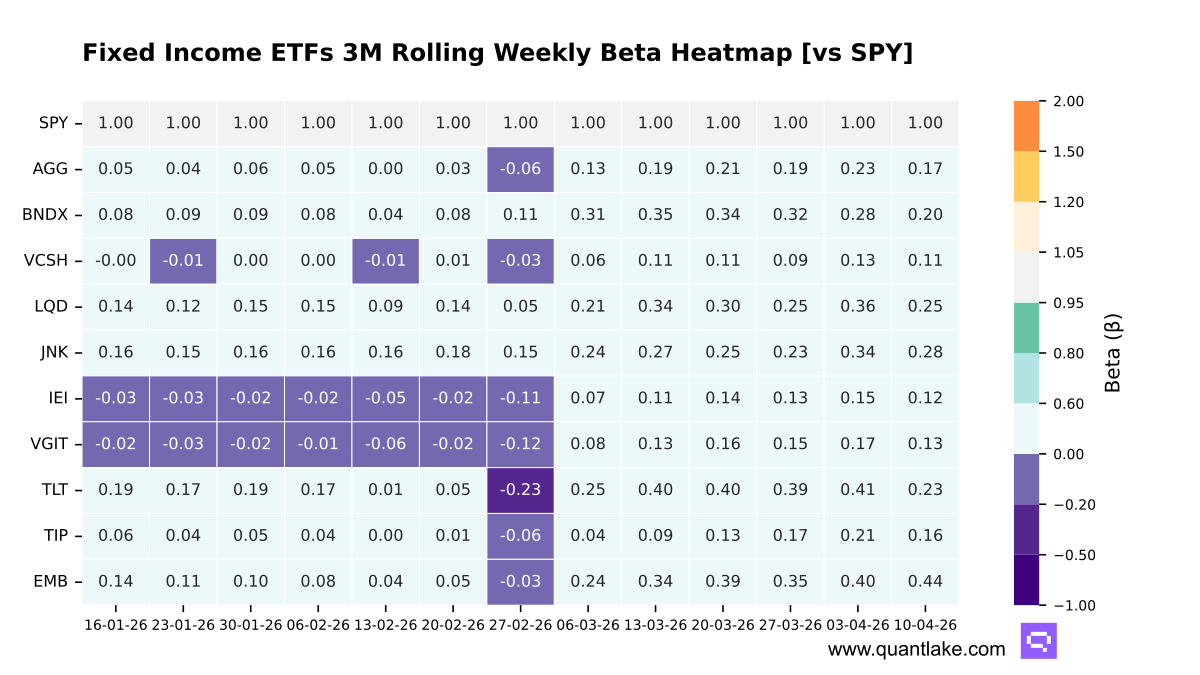
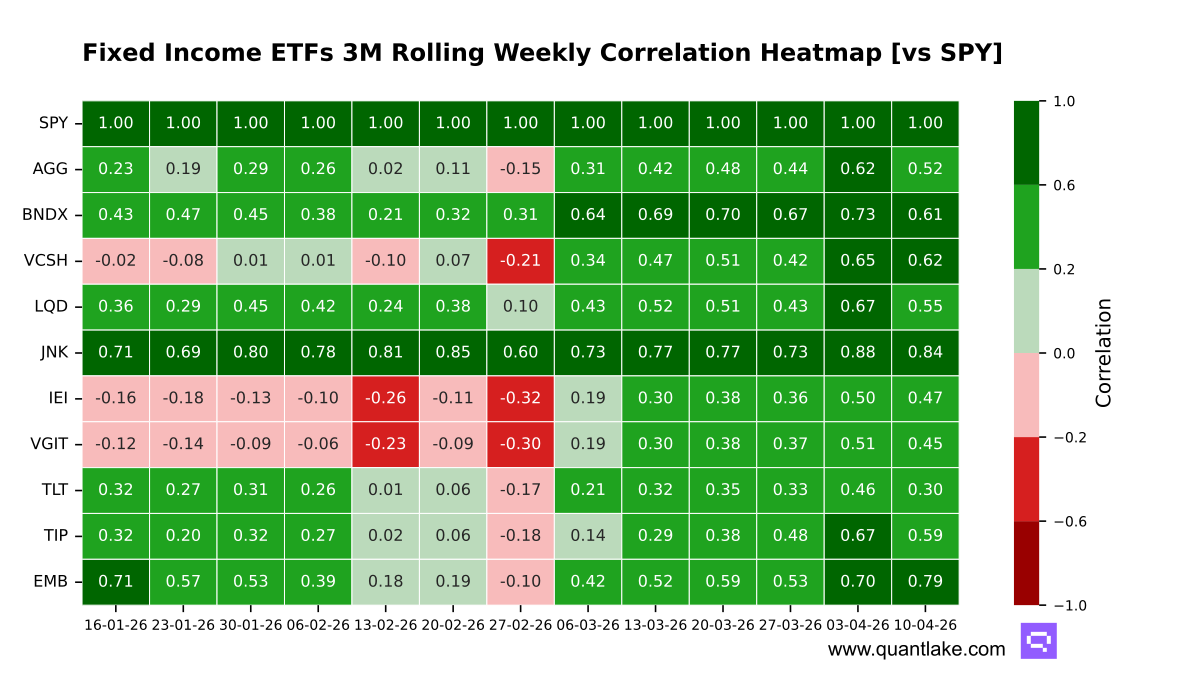
Taken together, the bond message pushed back against any full-risk interpretation of the equity rebound. Credit-sensitive exposures were holding their ground, but the rates space was not confirming with a durable advance. TLT also showed decoupling from broad market moves, reinforcing that the weakness was becoming more bond-specific than part of a uniform cross-asset shift.
Romain Gandon
CEO, Quantlake
Disclaimer: This report is for informational and educational purposes only and does not constitute investment advice.